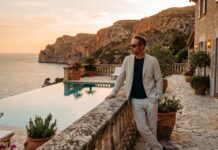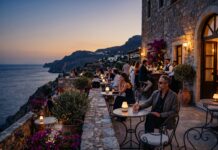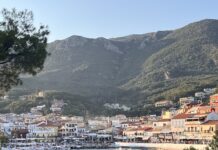






Luxury solo travel in the Ionian islands is one of those propositions the package-holiday industry has never quite known what to do with. This stretch of western Greece isn’t the Cyclades, no whitewashed villages perched on volcanic crags, no Instagram queue at a blue-domed church.
It isn’t quite the mainland either, despite technically being attached to it. It is, instead, a loose constellation of islands and a strip of Epirot coastline that sits in its own weather, its own light, and crucially for anyone travelling alone in their forties or fifties — its own rhythm.
The Ionian circuit I’m going to describe here covers four places: Lefkada, Meganisi, Kefalonia and Parga. They can be done as a tight week or stretched out to a fortnight. They can be soft-adventure or deeply sedentary. They can cost a great deal of money or a surprisingly reasonable amount, depending on where you sleep and who takes you out on the water. What they cannot be and this is the point, is rushed.
If you have ever found yourself standing in the middle of Santorini wondering whether you’d misread the brochure, this guide is probably for you.
Why the Ionian islands work for luxury solo travel over forty
Solo travel in your twenties is a different sport entirely. It involves hostels, group tours, the nagging sense that you should be meeting people. Solo travel over forty, done properly, is about editing. You’ve been to the places everyone goes. You have a rough sense of what you like and, more importantly, what you don’t. You want to read a book without being interrupted by a hen party. You want a restaurant that doesn’t have a QR code on the table. You want to be somewhere where being alone is not a category the staff have to file you under awkwardly.
The Ionian does this better than almost anywhere else in Greece, for three reasons.
First, the infrastructure is quietly grown-up. Preveza airport (the gateway to all four places on this route) is small, unstressful, and close to everything. Lefkada is connected to the mainland by a floating bridge — no ferry logistics, no overnight island-hopping anxiety. Meganisi is a twenty-five-minute water-taxi from Nidri. Kefalonia has its own airport with decent connections. Parga is a ninety-minute coastal drive north of Preveza. You are never stranded, never far from a decent hospital, never at the mercy of a strike or a missed ferry.
Second, the food is better than it has any right to be. The Ionian produces some of the finest olive oil in Europe, thanks to the microclimate and the older tree stock. Fish is still being caught by people who knew the previous generation of fishermen. Tavernas — the real ones, not the tourist-board ones — still operate on the assumption that you will sit down and stay for three hours, which is exactly what a solo traveller with a book actually wants.
Third, and this matters more than it sounds: the Ionian is green. The Cyclades are sculptural and arid, which is beautiful but also relentless. The Ionian islands are fringed with cypress, olive, and oleander; Lefkada has a surprisingly serious mountain interior; Parga sits in front of a Venetian fortress with pine forest stacked behind it. For a solo traveller who plans to spend real time walking, reading outdoors, or just staring at things, green is easier to be with than white.
The logistics, briefly
Before the itineraries, the practical bones.
Getting in: Fly into Preveza (PVK) for Lefkada, Meganisi and Parga. Fly into Kefalonia (EFL) if you’re doing Kefalonia standalone, or ferry from Lefkada’s east coast port of Vasiliki to Fiskardo on Kefalonia’s north tip if you’re doing the full circuit. Both airports are served seasonally from London, Manchester, Edinburgh, and increasingly from secondary UK airports.
Getting around: Hire a car. I know the instinct, especially when travelling alone, is to avoid driving in Greece. Ignore it. The roads on all four are well-surfaced, signposted in English, and dramatically underused outside August. Lefkada in particular requires a car if you want to reach the west-coast beaches without sitting on a bus schedule. Automatic transmission, small car, full insurance — the math always works out in favour of freedom.
When to go: Mid-May to mid-June, or the second half of September into early October. Avoid July and August unless you actively enjoy paying a premium for company you didn’t ask for. The shoulder seasons give you swimmable water, warm but not punishing temperatures, and — this is the part people underestimate — restaurants and hotels staffed by people who still have the energy to be charming.
Budget framing: A week on this circuit, done with intent, sits somewhere between £2,500 and £5,000 excluding flights, depending on whether you’re in a boutique hotel or a private villa, and whether you’re chartering boats or using water-taxis. That’s not cheap, but nor is it Mykonos. The ratio of quality to cost is, in my view, the best in Greece.
The seven-day itinerary (Lefkada-anchored)
If you only have a week, do not try to do all four places. You’ll spend the week in transit and arrive home needing a holiday.
Instead, anchor yourself in Lefkada and use it as a base for day trips. This is the itinerary I’d recommend to someone doing this trip for the first time.
Days 1–3: Lefkada itself. Base yourself either in the old town of Lefkada (Lefkada Town, for clarity — the island and capital share a name) or on the east coast near Nikiana. Spend your days alternating between the west coast beaches — Egremni, Kathisma, Porto Katsiki in the quieter morning hours — and the hill villages. Englouvi, Karya, and Exanthia are all worth the drive. Eat at Thomas (Lefkada Town) or one of the family-run places in Karya that doesn’t have a sign outside.
Day 4: Meganisi day trip. Take the early water-taxi from Nidri to Vathy or Spartochori. Rent a scooter if you’re comfortable with one; hire a local boat with skipper if you’re not. Meganisi is tiny and its pleasures are small — a swim in Elia or Ambelakia bay, a long lunch at a port taverna, a slow walk between the two main villages. Return on the late afternoon boat.
Days 5–6: Kefalonia by ferry. Drive down to Vasiliki, take the ferry to Fiskardo (the crossing itself is gorgeous — Ithaca to starboard, mountains behind you), and spend two nights in or near Fiskardo. Use this base for Myrtos Beach, Assos village, and a boat trip into the Melissani cave. Fiskardo itself is the rare Greek harbour village that has kept its architectural integrity, partly because it was the only place on Kefalonia not levelled by the 1953 earthquake.
Day 7: Back to Lefkada, or fly from Kefalonia. Depending on return flights. The ferry back to Vasiliki is an easy drive to Preveza; flying out of Kefalonia avoids the road transfer entirely.
This leaves Parga for a second trip, which, trust me, I’ve been four times, is a feature, not a bug.
The fourteen-day itinerary (full circuit)
With two weeks, you can do the whole thing properly, and Parga becomes the contemplative third act.
Days 1–4: Lefkada. As above, but slower. Add a day hike in the interior — the old village of Englouvi and the lentil fields above it make a good half-day loop. Spend one full afternoon doing nothing at a beach you don’t have to share.
Days 5–6: Meganisi. Stay overnight rather than day-tripping. There are a small number of proper villas now operating on Meganisi, and staying a night changes the texture of the place entirely — evening fishing lights in Vathy harbour, dinner with locals rather than day-boat crowds. This is one of the few places in Greece where you can still feel what the Ionian was like thirty years ago.
Days 7–9: Kefalonia. Base in Fiskardo for two nights, then shift south to Assos or Lourdata for one. The south of the island is underrated and has some of the best olive oil producers in the country; if you can time a visit to a working press, do.
Days 10–11: Travel day and arrival in Parga. Ferry back to Lefkada, drive north through Preveza and along the coast road to Parga. This is a proper driving day but the scenery pays for it. Arrive in Parga in the late afternoon, in time for a glass of something cold on a balcony overlooking the bay.
Days 12–14: Parga. The final act, and for my money still the most memorable. Parga is technically on the mainland but behaves like an island, tucked under its Venetian fortress with three beaches within walking distance of the town. Use the time here to genuinely slow down. Boat trip to the nearby Blue Caves; a morning at Lichnos or Valtos; a late afternoon wander up to the fortress for the view back over the harbour. Eat at the places locals eat at, not the ones with menus in six languages, the family-run tavernas set back from the seafront know what they’re doing and the fishermen’s catch comes in mid-afternoon.
Where to stay, per location
I’ll keep this section grounded in principles rather than reeling off hotel names — specific properties date quickly and the deep-dive pieces will do that work properly. But there’s one exception I want to make, which is villas, because the villa scene on this circuit deserves a proper conversation.
Lefkada: For solo travellers, I’d take a boutique property on the east coast (Nikiana or Lygia) over a big beach resort. The east coast is calmer, better for swimming from small beaches, and closer to the better restaurants. For villas, the hills above Agios Nikitas on the west side give you sunset and privacy; the east coast villas around Nikiana and Ligia are more about the pine-and-sea texture and give you easier access to Meganisi water-taxis.
Meganisi: Very limited luxury inventory, which is part of its appeal. A small number of private villas in Spartochori and Vathy; otherwise small family-run guesthouses. Book early, especially in shoulder season.
Kefalonia: Fiskardo for charm, Lourdata for beach, Lixouri for a different rhythm entirely (the peninsula side, often overlooked). The south coast around Skala has grown-up resort options if that’s your preference. Villa inventory is strongest in the hills above Fiskardo and along the south coast — the latter tends to be newer-build and well-equipped, the former more characterful.
Parga and the villa question
Parga itself is a working harbour town so that does mean the accommodation inside the town is mostly hotels, apartments, and guesthouses, rather than the private-pool, hillside-seclusion villas that a lot of over-forties solo travellers are actually looking for. The good news is that the villa inventory is there; it’s just sitting in the hills and bays immediately either side of town rather than in the town itself.
The three clusters worth knowing about:
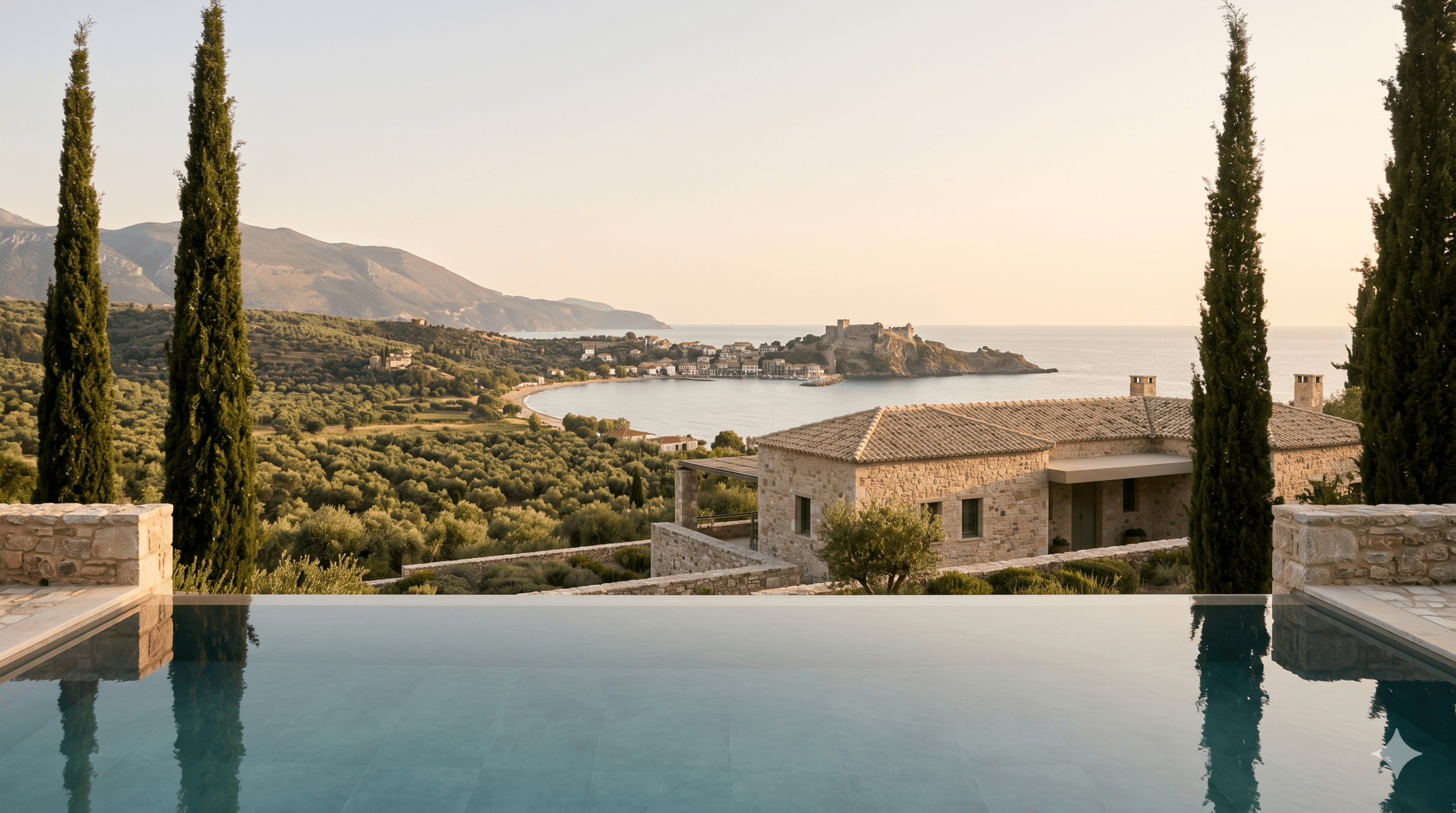
Valtos and Lichnos (south of Parga town): These are the two nearest beaches to Parga, and the hillsides behind them have become the natural home of the newer luxury villa stock. You’re close enough to walk or short-drive into town for dinner, but far enough away that you can genuinely hear the cicadas at night rather than the harbour. Properties here tend to be stone-built, olive-grove-set, and designed around the view back over the bay to the Venetian fortress.
Anthousa (the hillside village directly above Parga): A ten-minute drive up into the hills, Anthousa gives you the most striking aerial view of the harbour anywhere on this coast, and the villas there are often the quietest on the whole circuit. Good for solo travellers who want to be close enough to descend into town when they feel like it, but who are genuinely happier with a pool, a book, and a view.
Agios Ioannis and further north: A handful of newer villa developments sit along the coast road between Parga and Sivota, in small bays that don’t make it onto most travel websites. Privacy, direct or near-direct beach access, and almost no passing traffic.
The Sivota alternative
And now the piece of advice that the established travel press is a few years behind on: if Parga feels fully booked, too busy, or simply not quite your pace go to Sivota instead.
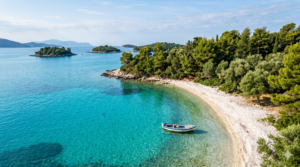
Sivota sits twenty-five miles north of Parga along the same coast, and it is, in effect, what Parga was fifteen years ago. A small harbour, a cluster of restaurants, a scatter of islets offshore (the waters here are often compared to the Caribbean, which is normally a lazy travel-writing cliché but in this case happens to be visually accurate). It has a fraction of Parga’s weekend crowd and, crucially, some of the most interesting luxury villa properties on the Epirus coast.
The villa cluster to know is the stretch around Agia Paraskevi beach and the hillsides above Sivota Bay. Private beachfront properties, hillside retreats with views back over the bay to Corfu and Paxos, architecturally-minded builds that use local stone and actually think about shade, orientation, and privacy rather than bolting another infinity pool onto a concrete box. For a solo traveller over forty, Sivota also has the quiet advantage of being near-impossible to accidentally end up somewhere loud. There are no clubs. There is no strip. There is a harbour, a few excellent seafood restaurants, and a lot of water.
The practical play, if you’re doing the full fourteen-day circuit and want real seclusion, is to split the final leg: two nights in or near Parga for the town, the fortress, the harbour dinners — and three nights in a villa outside Sivota for the unwinding. It’s a thirty-minute drive between them, the coast road is beautiful, and you get the best of both without compromising either.
A short note on how to book villas on this stretch: the inventory is fragmented across specialist operators (Simpson Travel is probably the best-known for curated Epirus villas), owner-direct listings, and the usual platforms. The owner-direct route often gives you better properties at better rates but requires more due diligence; the operators do that work for you but mark it up accordingly. For solo travellers, I’d lean towards operator-booked on a first visit — mainly because having someone on the ground to call when the pool heater misbehaves is worth the premium — and then go direct once you’ve found a property and owner you trust.
What solo travel over forty actually looks like here
A note, because this is the part no one writes about properly.
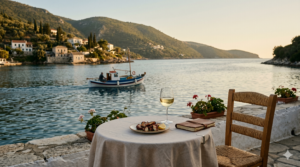
Nobody on this circuit is going to make you feel awkward for being alone. Greek tavernas in particular have a long-standing relaxed attitude to the solo diner, you’ll often be offered the best table (the one by the water, under the tree), because the assumption is that you’re the one who actually notices where you’re sitting. You will talk to more people than you expect to. You will also, if you want, talk to no one for days, and that will be fine too.
The thing to do is travel with slightly more structure than you would at home. Book the boat trip. Reserve the restaurant. Plan one proper walk per day. Having a small, loose itinerary for each day removes the one real pitfall of solo travel, which is the mid-afternoon drift into the hotel room.
And because this still needs saying in 2026 women travelling alone on this circuit are not going to run into the kind of low-grade hassle that other Mediterranean destinations sometimes produce. It is genuinely, boringly, pleasantly safe. Of all the places I’ve recommended to readers over the years, luxury solo travel in the Ionian islands is the proposition I’ve had the fewest regrets about sending people toward.
The one piece of advice I’d give
If you’re booking this trip, book Parga last in the itinerary, not first.
Parga is a place that rewards having already slowed down. If you fly in and go straight there, you’ll spend two days wondering why you aren’t enjoying it more. If you arrive after a week of Ionian island air, you’ll realise you’ve been aiming at this for the whole trip without knowing it.
The fortress, the harbour, the view from the top at sunset — it’s a small, specific, perfect thing. The kind of place you end up remembering five years later when you’re trying to describe what a proper holiday felt like.
Coming next
This is the pillar piece. Over the following weeks I’ll be publishing individual deep-dives on each location, written from the ground after a scouting trip in May — proper on-the-water reporting rather than desk research. The Parga piece in particular will include restaurant and boat-hire recommendations that don’t yet appear on English-language search results, drawing on fifteen years of coming back to the same harbour — and a standalone guide to the best villas in the Parga–Sivota corridor for solo travellers who want genuine tranquillity rather than a lightly re-branded apartment block.