







For about a decade, “smart home” meant fiddling with an app while your dinner went cold.
Fifty devices. Three competing platforms. A wall panel nobody under thirty could find the Wi-Fi password for. The promise was seamless living. The reality was a phone full of icons, each one demanding its own update at 11pm on a Tuesday.
That era is over.
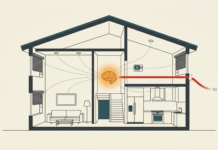
Walk into a villa being delivered in 2026 — whether it’s a 15th-century Florentine restoration or a brand-new build on Palm Jebel Ali — and you’ll notice what isn’t there. No light switches you have to remember. No fob jangling in your pocket. No tablet bolted to a kitchen wall. The technology hasn’t disappeared. It’s just stopped asking for your attention.
Welcome to the Invisible Home.
The screen is dead. Long live the room.
Two industry shifts in the last fortnight tell the story.
LG’s AI Home Robot started shipping. It folds laundry, organises the fridge, learns your routines, and connects to the ThinQ platform without you ever opening an app. Samsung’s EdgeAware AI quietly became the privacy-first standard in high-end builds — it processes twelve distinct sounds locally, from a burst pipe to a specific cough, and never sends a byte of audio to the cloud.
Both products share a philosophy that would have sounded radical in 2022. The interface is the room itself. You don’t operate the villa. The villa operates around you.
This is the bit the AI hype merchants keep getting wrong. The breakthrough in domestic AI isn’t a chatbot in your kitchen. It’s the absence of one. (I’ve written more about why “invisible AI” is the actual story for anyone over 40 watching this space →)
Where the money is going
The market is voting with its chequebook.
Nakheel just awarded Dh3.5 billion ($950M+) in contracts for 544 luxury villas across Fronds A to F of Palm Jebel Ali, with construction beginning this quarter. Borgo Pignano in Florence has completed its restoration into the largest hotel estate in the city — eleven historic buildings, thirty-two bespoke rooms, twelve acres on Montughi Hill. Small Luxury Hotels added twenty-nine new properties in a single morning, including Eight Venezia and La Serena Villas in Palm Springs.
The common thread isn’t the architecture. It’s what’s behind the walls.
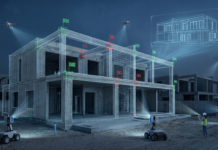
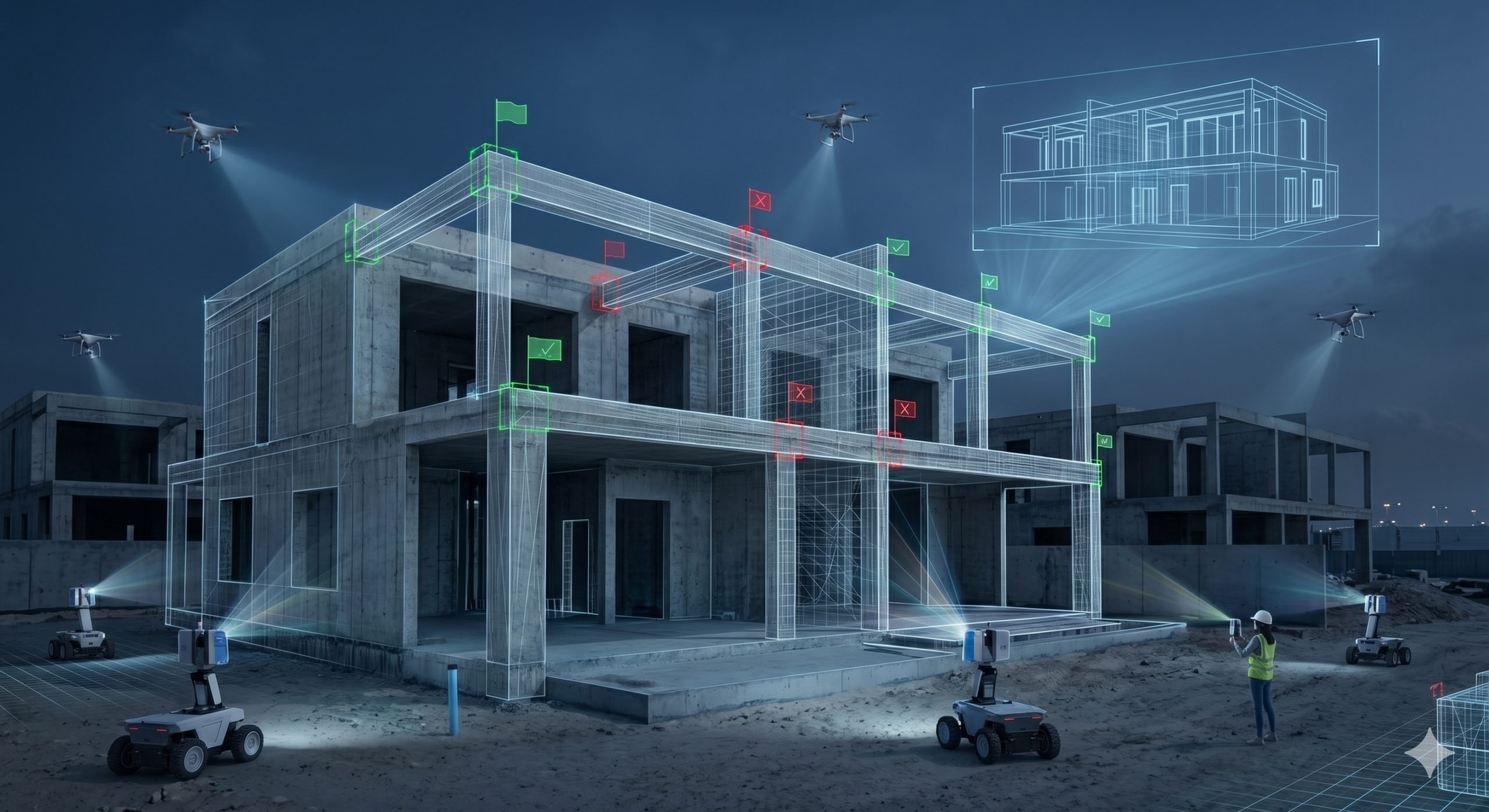
Architects are now using AI-driven light simulation to predict exactly how sunlight moves through a villa over twenty-four hours, then choosing tile and surface materials that perform under those specific thermal conditions. Scan-to-BIM automation reconciles daily drone scans of the building site against the digital twin, flagging construction errors in real time before they’re poured in concrete. The villa is being designed by AI before the first brick lands. The owner just sees the result.
What “invisible” actually feels like
The five technologies showing up in every premium 2026 spec sheet:
Facial recognition entry. Leelen-style systems unlock the door as you approach. No fobs. No app. Hands full of shopping? Doesn’t matter.
One-tap lifestyle modes. Forget controlling individual devices. You select a state — Cinema, Sleep, Secure, Arrival — and the villa simultaneously locks SIP-integrated doors, dims the lighting, drops the blinds and arms the perimeter cameras. One gesture. Everything happens.
Predictive maintenance. Sensors monitor the energy signature of every appliance. The pool pump starts drawing 5% more power than usual? The maintenance team gets a ticket before the water turns green. The owner never knew there was a problem.
Generative inventory. Samsung and LG have integrated generative AI into villa kitchens. Internal fridge cameras catalogue what’s there, flag what’s expiring, and sync with the concierge app to restock before you’ve finished your morning coffee.
Olfactory AI. Deepscent and similar systems blend custom fragrances based on your music, the weather, or what’s in your calendar that evening. Dinner party at 8? The villa starts shifting the air an hour before guests arrive.
None of this requires you to do anything. That’s the entire point.
The shoulder-season opportunity
For travellers rather than buyers, the timing is interesting. Late April is the peak shoulder-season booking window for late 2026 and early 2027, and the deals reflect it.
Kiko Villa in Barbados is offering seven nights for the price of six on bookings made before April 30. Alaia Belize has 25% off three-bedroom oceanfront villas for stays booked this week. Villas of Distinction has rolled out a universal Concierge Credit — $500 on bookings between $15,000 and $49,999, $750 on anything above that, redeemable for private chefs or pre-arrival stocking. Algarve and Mykonos portals are doing similar with $1,000 friction-removal credits.
The properties getting these deals aren’t the dated ones. They’re the new-spec villas with the technology baked in. Owners want bookings on the books, and they know what they’re sitting on. (If you’re looking at last-minute Mediterranean villa availability, this is exactly the window we track on Secluded Stays →)
What it means
The villa industry has historically lagged hospitality by about five years on technology adoption. That gap just closed.
A buyer commissioning a build today is specifying systems that, three years ago, would have been a Vegas demo. A guest booking a 2027 stay at Capella Galaxy Macau’s new Sky Villas — ninety-three vertical sanctuaries with private pools, designed by Moinard Bētaille — will experience facial recognition entry, predictive climate control and AI-curated scent layering as table stakes.
The owners and operators getting this right aren’t talking about the technology. They’ve worked out that the moment you have to explain the system, it’s failed.
The Invisible Home isn’t a product category. It’s a return to what luxury was always supposed to mean: things just work, and you don’t have to think about them.
The screens won. Then they vanished. The villas are better for it.