








For years, the phrase “smart villa” conjured images of voice-controlled lighting and thermostats you could adjust from your phone. Impressive at the time but in 2026 that definition feels embarrassingly quaint. The most sophisticated luxury properties are no longer smart in the user-controlled sense, they’re autonomous. They observe, learn, predict, and act. The human in the equation is increasingly optional.
This transition from Smart Home to what industry analysts are now calling Autonomous Operations is reshaping both how luxury villas are built and how they function day-to-day. Whether you’re a high-net-worth buyer considering a private estate in Santorini, a traveller booking a last-minute villa on the Amalfi Coast, or simply someone paying close attention to where luxury travel is heading, this shift matters, a lot.
KEY CONCEPTS AT A GLANCE
The Shift: Smart Home = user-controlled automation. Autonomous Operations = AI-led decisions without human input.
The Scale: Digital twins, construction robotics, and the Matter 1.5 protocol are now entering the luxury residential market at pace.
The Stakes: Buyers and discerning guests increasingly expect AI-managed comfort, energy efficiency, and predictive maintenance as standard.
AI in Construction: Before a Single Brick Is Laid
The intelligent villa now begins before ground is broken. Agentic AI has quietly entered the architectural design and construction process, and the results are beginning to show in ways that matter to buyers: fewer compromises, faster builds, and structurally sounder properties.
Generative Design
AI-powered generative design tools are now used to create villa floor plans from scratch, optimising layouts against variables that would take a human architect weeks to model: local solar patterns, site topography, prevailing wind, seasonal temperature variance. The result is a villa conceived not by instinct and tradition alone, but by data, one whose orientation naturally minimises cooling costs, whose windows are positioned to maximise passive warmth in winter, and whose wasted square footage has been quietly eliminated before the plans reach planning permission.
Construction Robotics
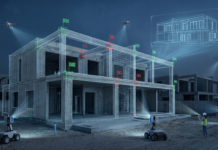
Autonomous bricklaying systems and drone-based inspection technology are becoming increasingly common on luxury villa sites. Construction drones are particularly valuable for high-altitude work — surveying roof structures, scaffolding inspections, and façade checks that previously required significant manual labour and risk. Build times on monitored luxury sites are being reduced by up to 1.5 times compared to traditional methods, with a measurable reduction in human error at critical structural stages.
“Buildings are no longer passive infrastructure. With AI and autonomy, they’re becoming a new workforce that manages energy, operations, and sustainability on their own.”
— Troy Harvey, CEO, PassiveLogic
Digital Twins and Predictive Maintenance
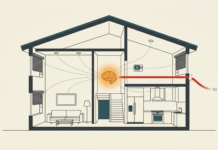
Perhaps no technology is reshaping luxury villa management more profoundly than the digital twin. The concept is elegantly simple: every pipe, cable, wall cavity, and mechanical system in the property is mirrored in a real-time virtual replica. Sensors embedded throughout the villa feed data into this twin continuously, humidity levels, water pressure, thermal variance, structural load and AI analyses that data to predict problems before they occur.
In practice, this means a well-configured luxury villa in 2026 can flag a potential pipe leak two to three weeks before it causes visible damage. It can identify early-stage mould risk in a bathroom cavity before it becomes a health issue. It can detect an HVAC component showing signs of wear before the system fails during a peak summer booking. For villa owners and managers, this isn’t just a comfort feature — it’s a significant asset protection mechanism.
WHY IT MATTERS FOR VILLA BUYERS
A luxury villa with a fully integrated digital twin commands measurably higher operational efficiency and lower maintenance costs over a 10-year period. For investment buyers in markets like Greece, Italy, and the Philippines, this increasingly factors into valuation models alongside location and finish specification.
The Digital Twin Consortium confirmed in early 2026 that digital twin systems are transitioning from experimental models to “operational, intelligent systems” with real-world validation across multiple sectors. The residential luxury market is following commercial real estate’s lead, albeit typically at a 24–36 month lag.
Semantic AI: The Niagara Framework
One of the more technically significant developments in autonomous building management is the emergence of semantic AI layers — systems that allow different hardware brands to communicate in a common language. The Niagara Framework, developed by Tridium, is a leading example: it allows your villa’s HVAC system, solar battery storage, pool heater, and irrigation controller to function as a single coordinated organism rather than four separate apps requiring four separate logins.
The practical difference is considerable. Rather than manually cross-referencing weather forecasts, energy tariffs, and guest arrival times to optimise villa systems, the AI does it continuously and invisibly. The pool reaches temperature precisely when it should. The underfloor heating pre-conditions rooms based on actual occupancy patterns. Energy stored in the solar battery is deployed strategically rather than arbitrarily.
Matter 1.5 and the Interoperability Revolution
For years, the smart home sector was defined by fragmentation. Every major ecosystem — Apple HomeKit, Google Home, Amazon Alexa operated in its own silo. Matter, the universal connectivity standard developed jointly by Apple, Google, Amazon, and Samsung, has spent three years building towards a resolution. Matter 1.5, released in November 2025, represents the most significant update yet — adding native camera support, environmental sensors, and a substantially improved energy management cluster.
- Calendar-aware automation: A Matter 1.5-integrated villa can read arrival times from a connected calendar and pre-condition the property accordingly — pre-cooling the master suite, warming towels, preparing the kitchen — without any manual instruction.
- Energy grid coordination: Smart appliances now function as “intelligent grid participants,” deploying stored solar energy during peak tariff periods and drawing from the grid when costs are lowest.
- Cross-brand reliability: Any device carrying the Matter certification badge now works with any platform. The era of proprietary lock-in is functionally over for new luxury builds.
It’s worth noting a degree of honest nuance: implementation across major platforms remains uneven in early 2026. Samsung SmartThings moved to full Matter 1.5 support rapidly; Google Home has been slower. For villa developers and buyers commissioning new builds, the specification sheet should explicitly include Matter 1.5 certification requirements for all integrated systems.
Invisible Orchestration: The Villa That Watches the Sky
The most visible or rather, the most deliberately invisible expression of AI in the 2026 luxury villa is what the industry calls “invisible orchestration.” This is the seamless, background intelligence that adjusts the villa’s environment continuously without any human instruction or awareness.
AI Smart Glass
Electrochromic glass, windows that dynamically adjust their tint based on real-time sunlight intensity is moving from architectural novelty to standard specification in the upper tier of the market. In practical terms, it means a villa’s floor-to-ceiling glass walls can offer unobstructed views in the morning light, automatically darken at midday to reduce solar heat gain by 20–30%, and return to transparency as afternoon light softens — all without blinds, shutters, or manual intervention.
Arrival Intelligence
Calendar integration with villa management systems is perhaps the most immediately legible example of autonomous operations for guests and owners. A villa equipped with Matter 1.5 and a connected AI management layer can see your flight landing, your car rental collected, your estimated drive time and use that information to ensure every aspect of the property is at precisely the right state for your arrival. Not pre-programmed. Calculated in real time.
“In 2026, the most considered luxury isn’t the finish of the marble or the thread count of the linen. It’s a villa that already knows you’re coming before you ring the bell.”
What This Means If You’re Buying, Booking or Building
If you’re in the market for a luxury villa purchase — particularly in markets like the Greek islands, Tuscany, or Southeast Asia where new-build specifications vary enormously — the technology checklist has changed materially in the last 18 months. Here’s what to look for:
- Digital twin integration: Ask whether the property has an active IoT sensor network and what platform manages the data. Twinview, PassiveLogic, and Siemens’ Desigo CC are established names in this space.
- Matter 1.5 certification: Insist on it for all new-build smart systems. It future-proofs your investment against the next platform shift.
- Energy management layer: Solar battery storage paired with an AI dispatch system (rather than simple net metering) delivers a meaningful return on investment in sun-rich markets.
- Semantic building OS: If the villa uses a Niagara Framework or equivalent semantic layer, its systems can be upgraded and extended without replacing hardware.
For those booking rather than buying, the practical implication is subtler but real: the gap between a luxury villa that is merely expensively furnished and one that is genuinely well-managed is widening. AI-managed properties tend to have better climate control consistency, faster fault response, and fewer operational surprises. These are the properties increasingly worth seeking out.
A Note of Honest Calibration
It would be misleading to suggest that every luxury villa in 2026 has reached this level of autonomous sophistication. The technology is real, the direction is clear, and the early adopters are demonstrably ahead — but the majority of the market, particularly in secondary locations and older stock, remains far more modest in its capabilities. A villa described as “smart” still frequently means little more than voice-controlled lighting and a Sonos system.
The value of understanding where the leading edge sits is in knowing what to ask for — and what to expect as the standard gradually catches up.
FURTHER READING & SOURCES
Digital Twins in 2026: From Replicas to Intelligent AI-Driven Systems — RTInsights, January 2026
The Future of Digital Twins in 2026: Smart Building Operations — Twinview, January 2026
PassiveLogic & Aroundtown: Autonomous Buildings in Europe — Build in Digital, September 2025
Digital Twin Technology: The 2026 Guide to Luxury Residential Construction — CRAYDL, March 2026
The Matter Standard in 2026: A Status Review — Matter Smart Home, January 2026
AI Goes Physical: The Convergence of AI and Robotics — Deloitte Tech Trends 2026