






The biggest smart home story of 2026 isn’t a product launch.
It’s a quiet exodus.
Across tens of thousands of households — disproportionately built by professionals in their forties and fifties — the cloud-based smart home is being replaced with something that should have existed all along: a local AI smart home that works offline, costs nothing in subscriptions, and doesn’t ship your living room habits to a server farm in Virginia.
This isn’t a fringe movement anymore. CES 2026 made “offline AI” the dominant theme in consumer hardware for the first time since the original Amazon Echo launched in 2014. UGreen, Synology and half a dozen other manufacturers shipped consumer NAS units with on-device language models built in. Home Assistant’s native Ollama integration — released quietly in mid-2025 — now has tens of thousands of users running fully local voice pipelines.
The mainstream tech press has barely noticed.
What the cloud smart home actually delivered
A decade.
A decade of Alexa devices bricked when the SDK changed. Nest thermostats stripped of features in firmware updates. HomePods that still can’t reliably set a timer. Voice assistants that got measurably worse as their owners turned them into advertising surfaces.
And the relentless, cheerful corporate assumption — built into every product launch since 2015 — that your home was a recurring revenue stream. A subscription tier waiting to be introduced retroactively. A behavioural dataset waiting to be monetised.
The over-40 audience has been the most consistently burned by this era. We bought the devices when they were sold as one-time purchases. We watched them lose features. We watched the subscription paywalls go up around things we’d already paid for. We learned what “platform risk” means in a domestic context: it means the thing on your wall stops working because someone in Seattle decided it should.
That’s not technophobia. That’s pattern recognition.
What the local AI smart home actually is
The stack that’s quietly become standard runs on hardware most professionals already own — a second-hand Mac Mini, a £400 mini PC, or a modern NAS like the UGreen iDX6011 series. The software is all free and open source:
- Home Assistant orchestrates the actual devices
- Ollama runs a local language model on the same hardware
- Whisper handles speech-to-text without sending audio anywhere
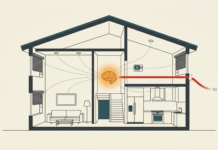
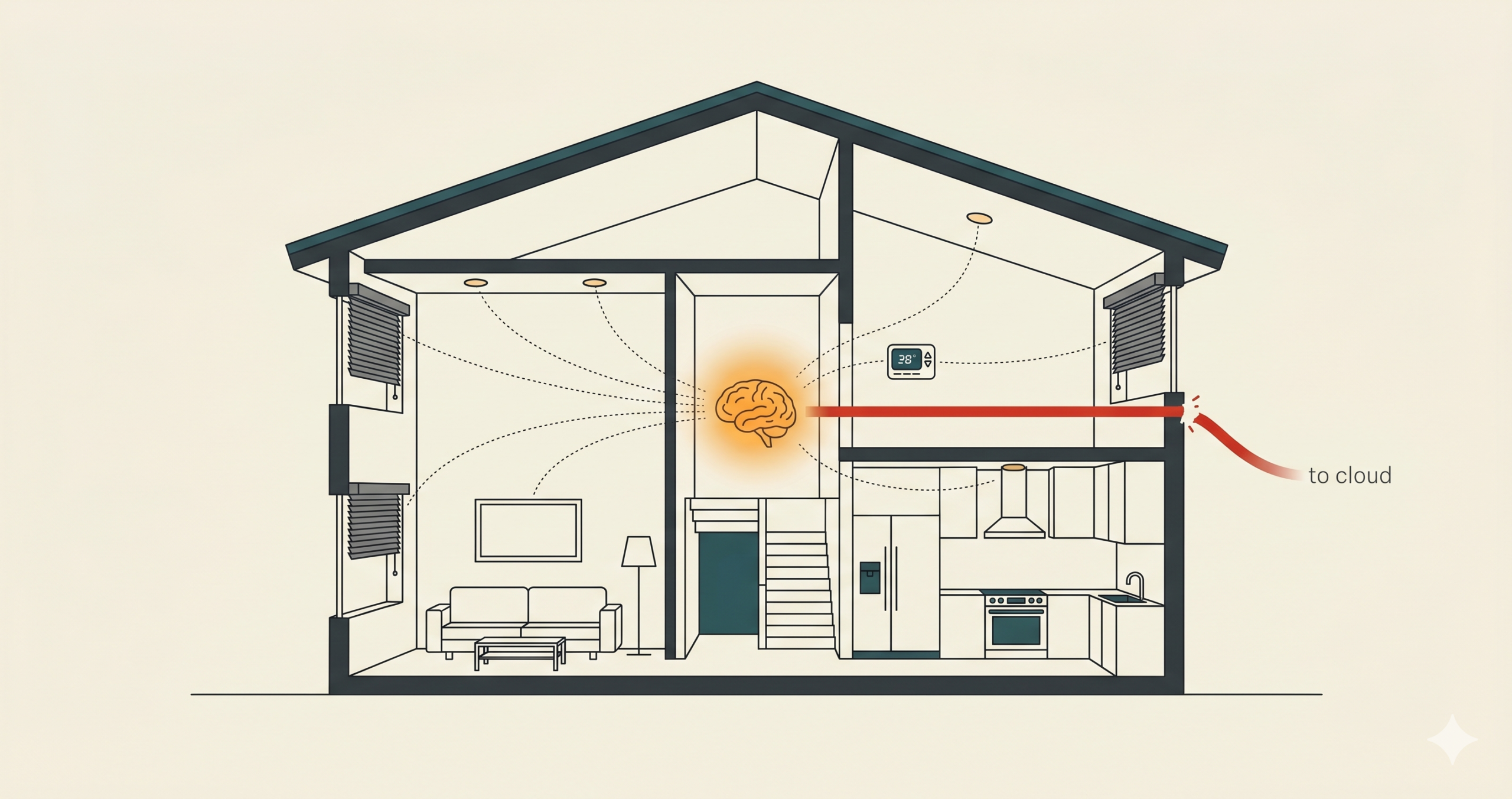
The behavioural difference is what matters. You can say “it feels a bit bright and stuffy in here” and the system will dim the shades and drop the AC by two degrees — because a local language model is interpreting intent rather than matching keywords against a command tree. There’s no wake-word gymnastics. No “sorry, I didn’t catch that.” No recording being shipped to a server in Virginia so an advertiser can learn you’re cold.
Your voice never leaves the building. Your lights still work if your broadband goes down. Your devices aren’t bricked when the manufacturer pivots. Your subscription cost is zero.
This is what every consumer-facing smart home keynote promised between 2014 and 2024. It’s now achievable for roughly the cost of one year of premium Alexa, Google Home, and Apple HomeKit subscriptions combined.
Why the over-40s are leading this
It’s not because we’ve suddenly become technical.
It’s because the cost-benefit of cloud convenience finally inverted for the demographic that’s been paying attention longest. We’ve owned three voice assistants. We’ve watched two of them get worse. We’ve had hardware bricked we paid £200 for. We’ve read the privacy policy updates that arrived after the device was already in the kitchen.
The 25-year-old buying their first smart speaker is at the start of a trust curve. The 45-year-old is somewhere near the bottom of it.
There’s also a quietly important demographic point: the local AI smart home requires patience, slight technical curiosity, and a willingness to spend a weekend setting something up properly rather than tearing into a box and shouting at it. That’s not a young person’s profile. That’s a 40+ professional’s profile — the same audience that figured out NAS units, mesh networking, and home VPNs five years before the mainstream did.
What this means for the next 18 months
Three things to watch:
1. The “AI NAS” category is going to consolidate fast. UGreen, Synology and ASUSTOR all shipped competing local AI products at CES 2026. Most will iterate hard on the software layer through 2026-27, because the hardware is already mature. The winners will be the platforms that handle non-technical users gracefully — which is currently nobody.
2. The big platforms will respond, badly. Expect Amazon, Google and Apple to launch “private” tiers of their cloud assistants that process some commands locally while still requiring an account. This will be marketed as a feature. It will mostly be a defensive crouch.
3. The vocabulary will shift. “Smart home” still implies cloud. The phrase “local AI smart home” — or some near variant — will become the way the industry distinguishes the new architecture from the legacy one. Watch for it in product marketing by Q4.
The pattern
The local AI smart home is the first significant consumer tech category in years that was built by users rather than handed down by platforms. It’s a response to a decade of paying for hardware that turned out to be rented. It’s working. It’s growing faster than anyone outside Home Assistant’s GitHub is tracking.
And it’s being led by the demographic the tech press most consistently writes off as late adopters.
The smart home finally got smart.
It just had to leave the cloud to do it.